Table of Contents
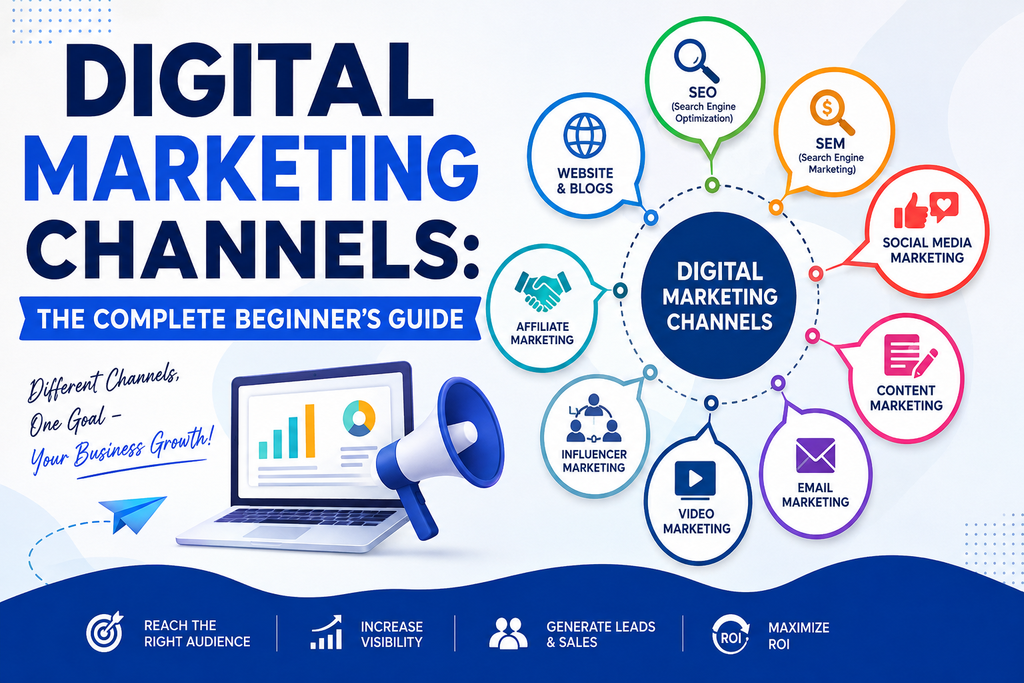
Have you ever wondered why you suddenly see an advertisement for a pair of shoes right after searching for them online? No, your phone is not reading your mind. Welcome to the world of Digital Marketing Channels.
Imagine opening a restaurant. You make the best biryani in town, but nobody knows about it. It is like hosting a birthday party and forgetting to send invitations. This is where Digital Marketing Channels come in. They help businesses reach the right audience at the right time through different online platforms.
In this guide, you will learn what Digital Marketing Channels are, why they are important, and how businesses use them to grow online.
What Are Digital Marketing Channels?
Digital Marketing Channels are online platforms and methods used by businesses to promote their products, services, or brands. These channels help companies connect with potential customers through the internet.
Think of Digital Marketing Channels as roads. Each road leads to a different group of people. Some people spend time on Facebook, while others search on Google or watch videos on YouTube. Businesses use different channels to reach these audiences.
Why Are Digital Marketing Channels Important?
Without Digital Marketing Channels, businesses would struggle to attract customers online.
- Reaching a larger audience
- Building brand awareness
- Generating leads and sales
- Improving customer engagement
- Tracking marketing performance
- Increasing return on investment (ROI)
For example, a local bakery can use Facebook to showcase cakes, Google Search to attract nearby customers, and email marketing to inform existing customers about special offers.
Benefits of Digital Marketing
Before exploring Digital Marketing Channels, it is important to understand why digital marketing has become so popular.
1. Cost-Effective Marketing
Traditional advertising can be expensive. A newspaper advertisement or television commercial may cost thousands. Digital marketing allows businesses to start with a small budget and scale gradually.
2. Targeted Audience Reach
Businesses can target specific audiences based on:
- Age
- Gender
- Location
- Interests
- Online behavior
For example, a digital marketing course provider in Batticaloa can show ads specifically to people interested in marketing, freelancing, or business growth.
3. Measurable Results
One of the biggest advantages of digital marketing is tracking performance.
Businesses can measure:
- Website visits
- Ad clicks
- Leads generated
- Sales conversions
This helps marketers make better decisions.
4. Better Customer Engagement
Customers can interact with brands through comments, messages, reviews, and social media posts.
5. Global Reach
A small business can reach customers worldwide through Digital Marketing Channels without opening physical branches.
Types of Digital Marketing Channels
There are several Digital Marketing Channels available today. Each channel serves a unique purpose.
1. Search Engine Optimization (SEO)
SEO is one of the most powerful Digital Marketing Channels.
It involves optimizing a website so it appears higher in search engine results.
Example
Suppose someone searches:
“best digital marketing course in Sri Lanka”
If your website ranks on the first page, you receive free traffic.
Benefits of SEO
- Free organic traffic
- Long-term results
- Increased credibility
- Better user experience
2. Search Engine Marketing (SEM)
SEM involves paid advertising on search engines such as Google.
Businesses bid on keywords to appear at the top of search results.
Example
A restaurant may run Google Ads for:
“best restaurant near me”
When users search, the ad appears instantly.
Benefits of SEM
- Immediate visibility
- Highly targeted traffic
- Fast lead generation
3. Social Media Marketing
Social media is one of the most popular Digital Marketing Channels today.
Platforms include:
- TikTok
- X (Twitter)
Example
A clothing store posts a new collection on Instagram and receives orders through direct messages.
Benefits
- Increased brand awareness
- Customer engagement
- Lead generation
- Community building
4. Content Marketing
Content marketing focuses on creating valuable content to attract audiences.
Content types include:
- Blog posts
- Videos
- Infographics
- Podcasts
- E-books
Example
A fitness trainer publishes blog articles about weight loss tips and attracts potential clients.
Why It Works
People trust businesses that provide useful information instead of constantly selling.
5. Email Marketing
Email remains one of the highest-converting Digital Marketing Channels.
Businesses send emails to nurture leads and retain customers.
Example
An online academy sends weekly learning tips and course updates to subscribers.
Benefits
- Personalized communication
- High ROI
- Customer retention
- Sales promotion
6. Video Marketing
Video content is growing rapidly.
Platforms include:
- YouTube
- Facebook Video
- Instagram Reels
- TikTok
Example
A restaurant uploads a video showing how its signature dish is prepared.
People watch, get hungry, and visit the restaurant.
That is marketing doing its job.
Benefits
- Higher engagement
- Better storytelling
- Increased trust
7. Affiliate Marketing
Affiliate marketing allows individuals to earn commissions by promoting products.
Example
A blogger recommends a software tool and earns a commission for every sale generated through their referral link.
Benefits
- Performance-based marketing
- Low risk
- Expanded reach
8. Influencer Marketing
Influencers have loyal followers who trust their recommendations.
Businesses collaborate with influencers to promote products.
Example
A beauty brand partners with a makeup creator to review a new product.
Benefits
- Increased credibility
- Faster brand awareness
- Better audience trust
How to Choose the Right Digital Marketing Channels
Not every business needs every channel.
Choose Digital Marketing Channels based on:
Business Goals
Do you want:
- More traffic?
- More sales?
- More brand awareness?
Your goal determines the channel.
Target Audience
Understand where your audience spends time online.
For example:
- Professionals → LinkedIn
- Teenagers → TikTok
- Local customers → Google Search
Budget
Some Digital Marketing Channels require advertising budgets, while others like SEO focus on organic growth.
Resources
Creating videos requires different skills than writing blog content.
Select channels your team can manage effectively.
Common Mistakes Businesses Make
Using Too Many Channels
Trying every platform at once often leads to poor results.
Ignoring SEO
Many businesses focus only on social media and forget about search traffic.
Inconsistent Content
Posting once a month and disappearing is not a strategy.
Not Tracking Results
Successful marketers constantly analyze and improve campaigns.
Conclusion
Digital Marketing Channels are essential for businesses that want to succeed online. Whether it is SEO, social media marketing, email marketing, content marketing, video marketing, or paid advertising, each channel plays a unique role in reaching customers.
The best approach is not to use every channel but to choose the right Digital Marketing Channels based on your audience, goals, and budget. When used correctly, these channels can increase visibility, generate leads, improve customer relationships, and grow revenue.
Remember, digital marketing is like fishing. The more suitable Digital Marketing Channels you use, the more chances you have of catching the right customers.